
Journal of Cancer Research and Pharmacology
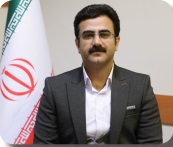
Academic position: Associate professor
Dr. Bagher Farhood is an expert researcher in the fields of Cancer Research, Radiotherapy, Medical Physics, Pharmacology, Herbal Medicine and AI in Medicine. He received a Bachelor's degree in Radiotherapy from Babol University of Medical Sciences. He earned his M.Sc. in Medical Physics from Mashhad University of Medical Sciences and his PhD in Medical Physics from Tehran University of Medical Sciences. Currently, he, as an associate professor, is working in the Department of Medical Physics and Radiology at Kashan University of Medical Sciences, Iran.
Honors and Awards
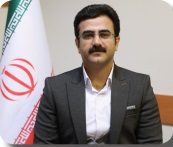
Academic position: Associate professor
Dr. Bagher Farhood is an expert researcher in the fields of Cancer Research, Radiotherapy, Medical Physics, Pharmacology, Herbal Medicine and AI in Medicine. He received a Bachelor's degree in Radiotherapy from Babol University of Medical Sciences. He earned his M.Sc. in Medical Physics from Mashhad University of Medical Sciences and his PhD in Medical Physics from Tehran University of Medical Sciences. Currently, he, as an associate professor, is working in the Department of Medical Physics and Radiology at Kashan University of Medical Sciences, Iran.
Honors and Awards
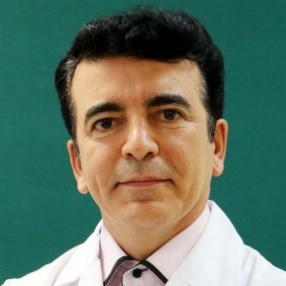
Academic position: Full professor
Abolfazl Ardjmand is a neuroscientist and professor of neurophysiology and neuroscience at the Kashan University of Medical Sciences. He is a senior investigator in the Institute for Basic Sciences at the Physiology Research Center at Kashan University of Medical Sciences. He received a Bachelor's degree from Tehran University. Following his M.Sc. in neurophysiology from Tarbiat Modarres University and PhD in neuroscience from Shahid Beheshti and employment at the Department of Physiology at Kashan University of Medical Sciences, he served as an assistant professor at the Physiology Department of Medical School of Kashan University of Medical Sciences. Currently, he, as a professor and an investigator, is working on learning, memory and synaptic plasticity in rodents using nervous system disorders models at the Institute for Basic Sciences.
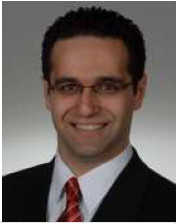
Academic position: Full professor
Neurosurgeon-in-Chief at Dr. Schneiderhan GmbH/ Isar-Hospital, Munich, Germany
Academic position: Full professor
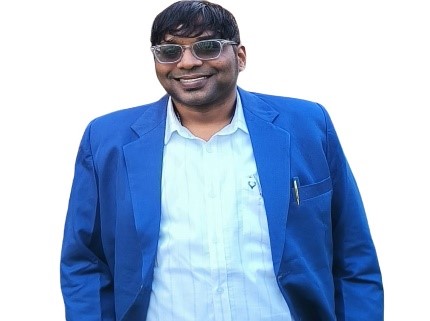
A dedicated and Quality academic Researcher in Pharmacognostical and Alternative modern therapeutic care, having comprehensive knowledge on herbal product research and development with a track number of publications, presentations and editorials and a passionate having a keen ability in Laboratory drug discovery and development from herbs with a proven ability in quality documentation. Awardee for various national and International awards like INSA 2019, AIMF visiting Scientist fellow ship etc., Had visited three african countries as part of academic research to explore Indo african plants as an antitubercular and anticancer libraries. Currently working as a Professor in school of pharmaceutical sciences, lovely professional university, Punjab, India.
Academic position: Full professor
Fahad I. Alsaikhan is a pharmacotherapist and a professor of pharmacy practice at the College of Pharmacy, Prince Sattam Bin Abdulaziz University. He also serves as a consultant clinical pharmacist, researcher, and faculty member in the clinical pharmacy department at the same institution. He earned his Bachelor of Pharmaceutical Sciences from King Saud University in Riyadh, Kingdom of Saudi Arabia, and pursued his Doctor of Pharmacy degree at the University of Health Sciences and Pharmacy in Saint Louis, Missouri, United States. Furthermore, he completed a post-doc ASHP-accredited specialty residency at the College of Pharmacy, Oklahoma University Health Sciences Center, Oklahoma, United States. Currently, he holds the position of full professor at the College of Pharmacy, Prince Sattam Bin Abdulaziz University, in Alkharj, Riyadh, Kingdom of Saudi Arabia.
Academic position: Researcher
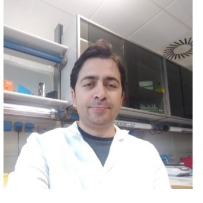
Dr. Hassan Dastsooz is a molecular biologist and geneticist specializing in complex systems for life sciences, with a focus on epigenetics, cancer biology, stem cell differentiation, and muscle development. He currently works as a Postdoctoral Research Fellow at the Italian Institute for Genomic Medicine (IIGM) and the University of Turin, Italy, primarily investigating genetic and epigenetic alterations involved in cellular reprogramming, tumorigenesis, and human embryonic stem cell (hESC) differentiation into muscle cells and colon organoids.
Dr. Dastsooz earned his PhD in Complex Systems for Life Sciences from the University of Turin, focusing on transcriptome profiling of hESC differentiation to skeletal muscle cells and the involvement of cancer-related genes and epigenetic regulation. Prior to this, he obtained a Master's degree in Human Genetics from Shiraz University of Medical Sciences and a Bachelor's degree in Medical Laboratory Sciences from Iran University of Medical Sciences.
His research experience spans various molecular and genetic techniques, including CRISPR interference (CRISPRi), dTAG degradation systems, chromatin immunoprecipitation (ChIP), RNA sequencing, cell culture, gene cloning, and bioinformatics analysis of next-generation sequencing (NGS) data. He has also extensively worked on deciphering tumor suppressor genes and oncogenes, cancer pathways, and epigenetic modifications in development and cellular transformation.
Dr. Dastsooz has contributed to numerous publications covering topics such as cancer epigenetics, stem cell biology, genetic disorders, and bioinformatics, and he actively collaborates with several international researchers and academic centers. He has held various research fellowships and grants and is involved in supervising students and teaching molecular genetics techniques and bioinformatics.
Academic position: Researcher
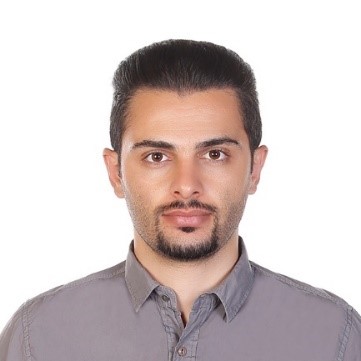
Educational Background:
PhD in Nanomedicine, Tehran University of Medical Science
MSc in Nanobiotechnology, University of Tehran
BSc in General Biology, University of Tabriz
Research Experience:
Research backgrounds and interests
Tissue Engineering
Academic position: Assistant professor
Dr. Javid Sadri Nahand is a researcher and academic in the field of medical virology. He earned his PhD in Medical Virology and currently works at the Infectious and Tropical Diseases Research Center at Tabriz University of Medical Sciences, Iran. His research primarily focuses on viral oncology, microRNAs, exosomes, virus-host interactions, and inflammation-related signaling pathways.
Dr. Sadri Nahand has authored or co-authored over 110 peer-reviewed publications in high-impact journals, covering a wide range of topics including viral pathogenesis, HPV-associated cancers, microRNA biology, and the role of exosomes in infectious and non-infectious diseases. His work has received over 4700 citations, with an h-index of 39.
He is particularly known for his studies on the role of viral and cellular microRNAs in inflammation, cancer progression, and immune regulation. Dr. Sadri Nahand has also contributed to research on COVID-19, HIV, and other viral infections, often exploring novel biomarkers and molecular mechanisms involved in disease progression.
In addition to his research, he has served as a reviewer for numerous international journals and actively collaborates with scientists in interdisciplinary fields, including immunology, nanomedicine, and molecular oncology.
Academic position: Assistant professor
Dr. Seyed Masoud Rezaeijo holds a Ph.D. in Medical Physics from Tarbiat Modares University, Tehran, Iran. His research interests lie at the intersection of artificial intelligence, image processing, and radiomics, where he has published numerous scholarly articles and led various cutting-edge projects. He is the founder and director of Sorena AI Academy—one of Iran’s largest institutions dedicated to programming and artificial intelligence education.
In addition to his academic and entrepreneurial endeavors, Dr. Rezaeijo actively serves as a reviewer for several national and international scientific journals. He is also the author of multiple books in both Persian and English, some of which have been published by renowned international publishers, including Springer.
Academic position: Assistant professor
Academic position: Assistant professor
Dr. Hamed Haghi-Aminjan is an Assistant Professor and Investigator specializing in Molecular Pharmacology and Toxicology, with research expertise spanning toxicology, pharmacology, and cancer biology. He earned his Ph.D. in Toxicology and Pharmacology from Tehran University of Medical Sciences (TUMS).
Currently, he holds dual roles as an Assistant Professor and Investigator at the Pharmaceutical Sciences Research Center of Tehran University of Medical Sciences (TUMS), Tehran, Iran. His extensive research contributions focus on molecular pharmacology, toxicology, cancer mechanisms, and cellular senescence. Dr. Haghi-Aminjan maintains active international collaborations with researchers and institutions worldwide.
He serves as a Section Editor for the DARU Journal of Pharmaceutical Sciences. In recognition of his scholarly impact, he was ranked among the world’s top 2% most-cited scientists in 2024 (Elsevier/Stanford University ranking).
Academic position: Assistant professor
Dr Farzaneh Fathi with h-index 26 has a very strong background in chemistry, as she graduated with a bachelor's degree in "Chemistry" and a master's degree in "Organic Chemistry". She has studied in the field of organic chemistry, which has created a great ability in me in the synthesis of biopolymeric-based nanomaterials, which has been added to my specializations in the doctoral course in "Medicinal Chemistry" for developing optic-based structures. Her PhD thesis was on developing “Optical based methods for early detection of cell surface biomarkers”. In addition, she has completed a Postdoc research work with the title of “Designing and developing of plasmonic and photonic crystal-based structures” in the Biophotonics Research Group of Tabriz University of Medical Science. Also, she has enough experience in the areas of optical biosensors, synthesisnanostructures by chemical methods, modification of biopolymers (chitosan, starch, silk fibroin), developing of smart drug delivery system, surface plasmon resonance (SPR) method and the investigation of the interaction and thermodynamic study between small molecules by optical, SPR, spectral and molecular docking methods.